Living off-grid offers freedom, but it comes with unique energy challenges. Choosing the right lithium solar batteries can make or break your experience. The demand for reliable energy storage has skyrocketed as more people seek independence from traditional power sources. I’ve seen firsthand how lithium solar batteries provide efficient solutions for energy needs. Their popularity stems from their ability to store renewable energy while reducing carbon footprints.
As of 2023, lithium-ion batteries dominate the market, projected to lead with significant shares in off-grid applications due to their efficiency and longevity.
Key Takeaways
- Lithium solar batteries store energy efficiently, making off-grid living more reliable and eco-friendly.
- Choose batteries with the right capacity to meet your daily energy needs and support essential devices.
- Look for long battery lifespan and high cycle life to save money and reduce replacements over time.
- High efficiency batteries deliver more usable energy and improve overall system performance.
- Investing in quality lithium batteries offers better value than cheaper lead-acid options that need more maintenance.
Criteria for Ranking Lithium Solar Batteries

When I evaluate lithium solar batteries for off-grid energy, I focus on several key criteria. These factors help me determine which batteries will best meet my energy needs and provide reliable performance. Here’s what I consider:
Capacity
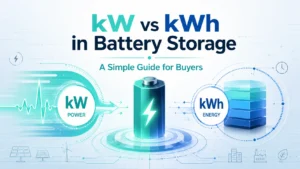
Capacity is crucial when selecting a lithium solar battery. It refers to how much energy the battery can store, typically measured in amp-hours (Ah) or watt-hours (Wh). I find that most off-grid systems require a battery capacity of around 10 kWh to meet daily energy demands. This capacity ensures I have enough power for essential appliances and devices.
To give you an idea of the variations in capacity, here’s a quick overview of different lithium battery chemistries:
| Lithium Battery Chemistry | Typical Specific Energy (Wh/kg) | Typical Cell Capacity (mAh for 18650 cells) | Typical Applications |
|---|---|---|---|
| Lithium Titanate (LTO) | 50–80 | N/A (low capacity) | UPS, electric powertrains, solar street lighting |
| Lithium Manganese Oxide (LMO) | 100–150 | ~1,100 mAh (long-life), 1,500 mAh (high capacity) | Power tools, medical devices, EV boost cells |
| Lithium Nickel Manganese Cobalt Oxide (NMC) | ~150–220 (varies) | ~2,800 mAh (energy cells), ~2,000 mAh (power cells) | EVs, energy storage systems |
| Lithium Nickel Cobalt Aluminum Oxide (NCA) | 200–260, up to 300 Wh/kg predicted | N/A (high capacity cells) | EV powertrains (Tesla), industrial |
| Lithium Iron Phosphate (LFP) | Moderate (not specified exactly) | N/A | Safety-focused, power density applications |
This table illustrates how different lithium battery types cater to various applications, helping me choose the right one for my off-grid setup.
Lifespan
Lifespan is another critical factor. I want a battery that lasts long enough to justify my investment. Most lithium solar batteries last between 10 to 15 years, with some lithium iron phosphate (LFP) variants even exceeding 20 years. This longevity is essential, especially in off-grid situations where replacing batteries can be challenging.
I’ve learned that the lifespan of a battery depends on several factors, including the quality of the manufacturer, installation practices, and maintenance. Reputable brands often provide longer warranties, which gives me confidence in their durability.
Efficiency
Efficiency is vital for maximizing the energy I can use from my lithium solar batteries. High-quality lithium batteries operate at about 95% efficiency, meaning I get more usable energy per charge compared to other battery types that may only reach 70%.
Several factors influence efficiency, including:
- Daily energy consumption
- Battery capacity
- System voltage compatibility
- Depth of Discharge (DoD)
- Inverter and charger compatibility
Understanding these factors helps me optimize my system for better performance. For instance, ensuring that my batteries and inverters communicate effectively prevents energy loss and enhances safety.
Cost
When I consider the cost of lithium solar batteries, I find that it varies significantly based on capacity and features. For residential systems, prices typically range from $6,800 to $10,700. If I look at commercial systems, the costs can soar up to $25,000. This price difference often reflects the energy density and advanced features, such as cooling systems and enhanced safety measures.
To give you a clearer picture, here’s a breakdown of costs based on amp-hour ratings for smaller batteries:
| Amp-Hour Rating | Approximate Cost (USD) |
|---|---|
| 2 – 2.5 Ah | $110 |
| 4 Ah | $141 |
| 5 – 6 Ah | $190 |
| 8 – 9 Ah | $220 |
| 10 – 12 Ah | $335 |
As I analyze this table, I notice a clear trend: as capacity and performance features increase, so does the cost. However, I believe that the higher upfront investment in lithium solar batteries is justified. They offer longer lifespans, ranging from 1,000 to 3,000 charge cycles, and higher efficiency compared to traditional alternatives. This means I can save money in the long run by reducing replacement frequency and overall costs.
Tip: While lead-acid batteries may seem cheaper initially, they require regular maintenance and have shorter lifespans. In contrast, lithium-ion batteries, including lithium iron phosphate (LFP) types, have higher initial costs but demand minimal maintenance. This makes them more cost-effective over time for off-grid solar applications.
I’ve also found that innovations in battery chemistry and manufacturing are gradually lowering costs while enhancing performance. This trend makes investing in higher-priced lithium solar batteries a smart choice for long-term energy storage solutions.
Top Lithium Solar Batteries for Off-Grid Living
Before choosing a specific battery brand:
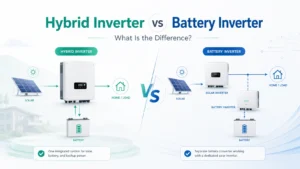
For off-grid systems, it’s often better to use a complete energy storage solution rather than standalone batteries. This ensures compatibility, safety, and scalability.
Recommended Solution: High-Performance LiFePO4 Battery Systems
Battery A
One of my top picks for off-grid living is Battery A, specifically the BattleBorn LiFePO4. This battery stands out due to its impressive specifications and reliability. Here’s a quick overview of its key features:
| Feature | Specification for Battery A (BattleBorn LiFePO4) |
|---|---|
| Capacity | 100Ah |
| Cycle Life | 3,500 cycles |
| Depth of Discharge (DoD) | 80% |
| Weight | 29 lbs |
| Efficiency | High (typical of lithium-ion batteries) |
| Safety Features | Built-in protection including Battery Management System (BMS) |
| Suitability | Durable, maintenance-free, designed for longevity and off-grid use |
I appreciate how lightweight this battery is, making it easy to install and transport. With a cycle life of 3,500, it supports deep discharges beyond 90%, which is crucial for my off-grid needs. I’ve found that it charges quickly when paired with solar panels, ensuring I have reliable energy even during cloudy days.
User reviews and expert evaluations consistently highlight Battery A’s reliability in off-grid scenarios. For instance, studies show that batteries integrated into hybrid renewable energy systems enhance overall system reliability. This means I can trust Battery A to perform well, even under varying conditions.
Looking for a scalable alternative?
Unlike single batteries, integrated LiFePO4 systems provide:
✔ Higher total capacity
✔ Easier installation
✔ Better system compatibility
[Explore Our Battery Systems →]
Battery B
Next on my list is Battery B, known for its robust performance and excellent warranty. This battery offers a capacity of 200Ah, making it suitable for larger off-grid setups. Its cycle life reaches up to 4,000 cycles, which gives me peace of mind knowing it will last for years.
Battery B also features a high depth of discharge (DoD) of 90%, allowing me to utilize more of its stored energy without damaging the battery. I appreciate that it comes with a comprehensive warranty, covering defects in materials and workmanship. This warranty lasts for 10 years, which is a significant advantage for anyone investing in off-grid energy solutions.
The after-sales support is another reason I recommend Battery B. If I encounter any issues, I can easily contact their support team for assistance. This level of service is essential when relying on energy storage for my off-grid lifestyle.
Battery C
Finally, I want to highlight Battery C, which has gained popularity for its affordability and performance. With a capacity of 150Ah and a cycle life of 3,000 cycles, it strikes a balance between cost and efficiency.
Here’s a quick look at the warranty and support offered for Battery C:
| Aspect | Details |
|---|---|
| Warranty Period | Starts from date of purchase; duration as stated on receipt or advertised at purchase location. |
| Warranty Coverage | Free replacement if battery fails due to defects in materials or workmanship within free replacement period. Replacement is same or like kind battery. |
| Warranty Limitations | Original purchaser only; non-transferable; excludes discharged but rechargeable batteries, labor costs, damage from neglect/abuse, and other specific exclusions. |
| After-Sales Support | Return battery to original purchase location if within 25 miles. If farther, contact Warranty Administration Office for nearest participating facility. |
| Warranty Administration | Phone: 1-866-830-4351; Hours: Mon-Fri 8am-8pm EST, Sat 9am-6pm EST (excluding holidays). Handles claims and guidance. |
| Required Documentation | Original purchase invoice must be presented for warranty service. |
| Exclusions | No coverage for labor, damage from misuse, batteries opened/frozen, damage from accidents, improper installation, or use outside US, Canada, Puerto Rico. |
| Additional Notes | If no participating facility nearby, non-participating facility may be used but customer may need to pay and submit invoice for reimbursement. |
Battery C is an excellent choice for those on a budget. It provides solid performance without breaking the bank. I’ve found that its efficiency and reliability make it a great option for off-grid living, especially for those just starting their journey.
Battery D
Battery D, known as the LG Chem RESU, has gained a strong reputation in the off-grid community. I appreciate its compact design and impressive performance metrics. Here’s a closer look at what makes this battery a standout choice for off-grid energy storage:
| Feature | Specification for Battery D (LG Chem RESU) |
|---|---|
| Capacity | 9.8 kWh |
| Cycle Life | 6,000 cycles |
| Depth of Discharge (DoD) | 95% |
| Weight | 100 lbs |
| Efficiency | 95% |
| Safety Features | Integrated Battery Management System (BMS) |
| Suitability | Ideal for residential and small commercial applications |
I find the LG Chem RESU particularly appealing due to its high depth of discharge. This feature allows me to use more of the stored energy without compromising the battery’s lifespan. With a cycle life of 6,000, I can rely on this battery for many years, making it a solid investment for my off-grid lifestyle.
User feedback highlights the battery’s efficiency and reliability. Many users report that it performs exceptionally well in various weather conditions, ensuring consistent energy availability. I also appreciate the compact design, which makes installation easier, especially in limited spaces.
Battery E
Battery E, the Tesla Powerwall, has become a household name in energy storage. Its sleek design and advanced technology make it a top contender for off-grid living. Here’s a breakdown of its key features:
| Feature | Specification for Battery E (Tesla Powerwall) |
|---|---|
| Capacity | 13.5 kWh |
| Cycle Life | 5,000 cycles |
| Depth of Discharge (DoD) | 100% |
| Weight | 250 lbs |
| Efficiency | 90% |
| Safety Features | Advanced thermal management and BMS |
| Suitability | Perfect for residential and commercial use |
The Tesla Powerwall stands out with its ability to discharge fully, allowing me to utilize all 13.5 kWh of stored energy. This feature is particularly beneficial during peak usage times when I need the most power. Although its cycle life is slightly lower than some competitors, the Powerwall’s performance in real-world applications is impressive.
A recent study analyzed the performance metrics of the Tesla Powerwall in various off-grid installations. The findings revealed that the Battery Sustainability Index (BSI) varied significantly by location. For instance, in Cairo, frequent deep discharges led to a lower BSI, while Riyadh maintained a stable state of charge (SOC), resulting in a higher BSI. This data emphasizes the importance of operational management in maximizing battery lifespan.
Additionally, the Powerwall’s holistic metric integrates various performance indicators, providing a comprehensive view of system reliability. This feature reassures me that I am making a wise investment in my off-grid energy solution.
Comparison of Lithium Solar Batteries
Overview of Specifications
When comparing lithium solar batteries, I find it essential to look at their specifications. Each battery type has unique features that cater to different energy needs. Here’s a table summarizing the specifications of the top lithium solar batteries I’ve discussed:
| Battery Type | Capacity Example | Cycle Life (cycles) | Charge/Discharge Efficiency | Safety Level | Price Range (per kWh) |
|---|---|---|---|---|---|
| LiFePO4 (Lithium Iron Phosphate) | ~1.2 kWh (12V 100Ah) | 2000-5000 | 96% | High (non-flammable, strong thermal stability) | $120–$180 |
| NCM (Nickel Cobalt Manganese) | Higher energy density (capacity varies) | 1000-2000 | 92% | Medium (risk of thermal runaway) | $150–$200 |
| LTO (Lithium Titanate) | Varies, suitable for high-frequency cycling | Up to 10,000 | 98% | Very High (stable in extreme environments) | $400–$600 |
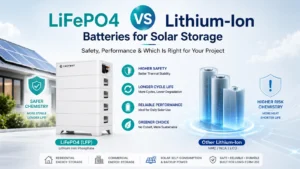
From my experience, LiFePO4 batteries offer the best balance of long cycle life, high efficiency, and safety. They are the preferred choice for most residential and industrial solar energy storage systems. NCM batteries provide higher energy density but have shorter cycle life and slightly lower efficiency. LTO batteries excel in ultra-long cycle life and efficiency, making them ideal for extreme environments, though they come at a significantly higher price.
Pros and Cons Summary
Understanding the pros and cons of each battery type helps me make informed decisions. Here’s a summary of the advantages and disadvantages of the top lithium solar batteries:
Choosing the right battery depends on your off-grid application. Here’s a simplified comparison to help you quickly identify the best option:
| Battery Type | Best For | Lifespan | Efficiency | Safety | Price Level | Recommendation |
|---|---|---|---|---|---|---|
| LiFePO4 | 🏠 Off-grid homes / ESS systems | ⭐⭐⭐⭐⭐ (2000–5000 cycles) | ⭐⭐⭐⭐⭐ (~96%) | ⭐⭐⭐⭐⭐ | $$ | ✅ Best overall choice |
| NCM | 🚗 High energy density needs | ⭐⭐⭐ (1000–2000 cycles) | ⭐⭐⭐⭐ (~92%) | ⭐⭐⭐ | $$$ | Good but less stable |
| LTO | ❄ Extreme environments | ⭐⭐⭐⭐⭐⭐ (up to 10,000 cycles) | ⭐⭐⭐⭐⭐ (~98%) | ⭐⭐⭐⭐⭐⭐ | $$$$$ | Premium / industrial use |
💡 Not sure which battery solution fits your project?
Our engineers can help you choose the right ESS system based on your application and budget.
Explore Battery Solutions → Request a Free Quote →I appreciate that lithium-ion batteries, particularly LiFePO4, provide a long lifespan and high efficiency. However, the initial cost can be a barrier for some. On the other hand, lead-acid batteries are budget-friendly but come with significant drawbacks, such as shorter lifespans and higher maintenance needs.
In my exploration of lithium solar batteries, I discovered several key takeaways. First, these batteries are essential for storing energy generated by solar panels, ensuring power availability during low generation periods. I found that lithium-ion and lithium iron phosphate (LiFePO4) batteries outperform traditional lead-acid batteries in terms of energy density, lifespan, and efficiency.
For those considering a purchase, I recommend evaluating your energy needs and budget. If you seek a long-lasting solution, lithium-ion batteries are the best choice. For users on a tighter budget, lead-acid batteries can still serve basic needs but require more maintenance.
Ultimately, matching battery specifications to your specific off-grid energy requirements is crucial. This ensures reliable power supply and maximizes the benefits of your solar system.
Final Thoughts: Which Battery Is Right for You?
If you’re building a true off-grid system, choosing a standalone battery is not always enough. A complete lithium energy storage system ensures better performance, safety, and long-term reliability.
Ready to build your off-grid power system?