Choosing a solar lithium battery is no longer just about comparing capacity and price. In 2026, installers, distributors, EPC contractors, and project buyers are paying more attention to battery structure, installation method, scalability, safety, inverter compatibility, and long-term serviceability.
For residential and commercial energy storage projects, three common battery formats are often compared:
- Stackable battery systems
- Wall-mounted battery systems
- Rack-mounted battery systems
Each design has its own advantages. A wall-mounted battery can save floor space in a home solar project. A stackable battery system can support modular expansion for larger capacity needs. A rack-mounted battery system can provide a more organized layout for equipment rooms, telecom backup, and small commercial storage.
This guide explains the differences between stackable, wall-mounted, and rack-mounted batteries, and helps you choose the right system for residential, commercial, or project-based solar energy storage.
Key Takeaways
Stackable batteries are best for projects that need modular expansion, higher capacity, and flexible system configuration.
Wall-mounted batteries are ideal for home solar backup, residential self-consumption, villas, and compact installation spaces.
Rack-mounted batteries are better for equipment rooms, telecom backup, small commercial projects, and centralized multi-module systems.
In 2026, LFP batteries continue to dominate stationary energy storage because of their safety, cycle life, cost stability, and suitability for frequent cycling. The IEA reported that battery storage is now the fastest-growing power technology, with 108 GW of new battery storage capacity deployed worldwide in 2025, 40% higher than in 2024. LFP batteries accounted for around 90% of battery storage deployments. (IEA)
For European buyers, battery traceability and documentation are also becoming more important. From February 18, 2027, certain industrial batteries above 2 kWh placed on the EU market will require a digital battery passport under the EU Battery Regulation. This matters for stationary energy storage systems, especially for distributors and project buyers serving the European market. (S-GE)
Quick Answer: Which Battery Type Should You Choose?
| Project Need | Recommended Battery Type | Why |
|---|---|---|
| Home solar backup | Wall-mounted battery | Compact, clean installation, saves floor space |
| Residential self-consumption | Wall-mounted or stackable battery | Suitable for daily cycling and backup power |
| Larger home energy storage | Stackable battery | Easier to expand capacity later |
| Small commercial storage | Stackable or rack-mounted battery | More flexible for higher capacity and structured layout |
| Telecom backup | Rack-mounted battery | Centralized wiring and easy front-access maintenance |
| Equipment room installation | Rack-mounted battery | Organized cabinet design |
| High-voltage project | Stackable high-voltage battery | Supports higher power and larger capacity |
| C&I energy storage | High-voltage or cabinet ESS | Better for peak shaving, backup, and industrial loads |
In general, choose a wall-mounted battery when space-saving and clean residential installation matter most. Choose a stackable battery when future expansion and higher capacity are priorities. Choose a rack-mounted battery when the project needs centralized wiring, cabinet installation, and easier maintenance access.
2026 Industry Context: Why Battery Structure Matters More Now
Solar storage projects are becoming more practical and more demanding at the same time. In earlier markets, buyers mainly compared battery capacity and price. In 2026, the decision is more project-driven.
Several industry trends are changing how buyers evaluate lithium battery systems.
1. Battery storage is growing faster than other power technologies
According to the IEA, battery storage is the fastest-growing power technology today. Global battery storage additions reached 108 GW in 2025, and total installed capacity is now eleven times higher than in 2021. (IEA)
This growth means buyers are no longer only looking for backup batteries. They are looking for systems that can support:
- Solar self-consumption
- Backup power
- Time-of-use optimization
- Peak shaving
- Demand charge reduction
- Microgrids
- C&I energy management
- Grid support and flexible energy use
As applications become more complex, the physical battery format becomes more important.
2. LFP remains the mainstream chemistry for stationary storage
LFP, or lithium iron phosphate, has become the dominant chemistry for solar and stationary energy storage. The IEA reported that LFP batteries account for around 90% of battery storage deployments because they are cheaper than many alternative lithium chemistries and better suited to frequent cycling. (IEA)
For buyers, this means the real comparison is often not “which chemistry is safest,” because LFP is already the preferred mainstream option for many stationary systems. Instead, the more practical question is:
Which LFP battery structure is better for my project: wall-mounted, stackable, or rack-mounted?
3. Sodium-ion is emerging, but LFP is still more bankable for most projects
Sodium-ion batteries are gaining attention because they may help diversify battery supply chains and reduce dependence on lithium-based raw materials. The IEA noted in 2026 that recent technology progress and investment announcements suggest growing momentum for sodium-ion batteries. (IEA)
However, for mainstream residential and commercial solar storage projects, LFP remains more mature, more widely supported by inverter ecosystems, and easier for installers and distributors to specify. For most 2026 procurement decisions, LFP is still the safer default choice unless the project has a specific reason to evaluate emerging chemistries.
4. EU battery documentation and traceability are becoming purchasing factors
For buyers selling into Europe, compliance is becoming more important. From February 18, 2027, industrial batteries above 2 kWh placed on the EU market will need a digital battery passport. This includes many stationary energy storage batteries. (S-GE)
This does not mean buyers should only compare battery appearance or capacity. They should also ask suppliers about:
- Product model traceability
- Battery specification documentation
- Safety certifications
- Transportation documents
- Warranty terms
- Recycling and end-of-life information
- Carbon footprint and supply chain readiness
For distributors and EPC contractors, these documents can directly affect long-term market access.
What Is a Stackable Battery System?
A stackable battery system is a modular energy storage system made of multiple battery units stacked vertically. Instead of installing a single fixed-size battery, users can add battery modules to increase total capacity.
Stackable batteries are usually floor-standing. They are commonly used in residential solar storage, larger home backup systems, small commercial projects, and some high-voltage energy storage applications.
Main Advantages of Stackable Batteries
Stackable batteries are popular because they offer strong flexibility. They allow the user to start with a smaller system and expand later as energy demand increases.
Key advantages include:
- Modular capacity expansion
- Compact vertical layout
- Easier future upgrades
- Cleaner appearance than scattered multiple units
- Suitable for high-voltage system configurations
- Good for installers who need repeatable project designs
A stackable system is especially useful when the customer may increase solar capacity, add more loads, or expand from basic backup to larger self-consumption or commercial use.
Main Limitations of Stackable Batteries
Stackable systems still need floor space. They may also require specific inverter compatibility, communication protocol matching, and maximum module number confirmation.
Potential limitations include:
- Not always suitable for very narrow spaces
- Total capacity depends on product design and inverter support
- Installation environment still needs clearance and ventilation
- High-voltage systems require qualified installation and commissioning
- Outdoor use depends on IP rating and site conditions
What Is a Wall-Mounted Battery?
A wall-mounted battery is a lithium battery pack installed directly on a wall using brackets or mounting hardware. It is one of the most common formats for residential solar storage.
Wall-mounted systems are often used in garages, utility rooms, villas, residential solar projects, and compact backup power systems.
Main Advantages of Wall-Mounted Batteries
The biggest advantage of wall-mounted batteries is space efficiency. Because the battery is fixed on the wall, it does not occupy much floor area.
Key advantages include:
- Saves floor space
- Clean residential appearance
- Good for garages and utility rooms
- Suitable for home backup and self-consumption
- Easier for homeowners to understand visually
- Works well for single-battery or small multi-battery systems
Wall-mounted systems are often the best choice when the customer wants a neat, compact installation and does not need a very large battery bank.
Main Limitations of Wall-Mounted Batteries
Wall-mounted batteries are not always the best choice for every site. The wall must be strong enough to support the battery weight, and installers must leave enough access space for wiring, inspection, and maintenance.
Potential limitations include:
- Wall structure must support the battery weight
- Expansion requires additional wall space
- Maintenance clearance must be planned
- Cable routing can become less clean with multiple units
- Not ideal for very large battery banks
- Outdoor installation requires suitable enclosure protection
What Is a Rack-Mounted Battery System?
A rack-mounted battery system uses multiple battery modules installed inside a standard rack or cabinet. This design is common in telecom backup, equipment rooms, server-room-style installations, off-grid systems, and small commercial energy storage projects.
Rack-mounted systems usually use front-access battery modules. Each module can include a display, communication ports, power terminals, and BMS indicators.
Main Advantages of Rack-Mounted Batteries
Rack-mounted systems provide a more organized layout when multiple battery modules are needed.
Key advantages include:
- Centralized cabinet installation
- Organized wiring
- Easier module access from the front
- Suitable for multiple battery modules
- Good for telecom and equipment rooms
- Easier to standardize for distributor projects
- Better cable management than scattered wall-mounted units
Rack-mounted batteries are often preferred by technical teams because the battery modules, communication cables, protection devices, and DC connections can be managed in one structured cabinet.
Main Limitations of Rack-Mounted Batteries
Rack-mounted batteries usually require more planning than a single wall-mounted system. They may need a dedicated rack, cabinet space, proper cable management, and professional commissioning.
Potential limitations include:
- Requires rack or cabinet
- Less suitable for very small residential spaces
- Installation may be more technical
- Cabinet layout must allow airflow and access
- Total system design should be planned before installation
Stackable vs Wall-Mounted vs Rack-Mounted Battery: Key Differences
| Comparison Factor | Stackable Battery | Wall-Mounted Battery | Rack-Mounted Battery |
|---|---|---|---|
| Installation Style | Floor-standing vertical stack | Mounted on wall | Installed in rack or cabinet |
| Best For | Expandable home and small commercial systems | Residential and compact spaces | Equipment rooms, telecom, commercial systems |
| Scalability | High | Moderate | High |
| Space Use | Uses vertical floor space | Saves floor space | Needs cabinet area |
| Installation Complexity | Medium | Low to medium | Medium to high |
| Maintenance Access | Depends on stack design | Requires wall-side access | Usually front-access friendly |
| Appearance | Modern and modular | Clean and residential | Technical and industrial |
| Inverter Matching | Important, especially for HV | Important for LV systems | Important for parallel LV systems |
| Best Buyer Type | Installers, EPCs, larger homeowners | Homeowners, residential installers | Distributors, telecom, commercial users |
| Typical Use Case | High-voltage solar storage, scalable projects | Home backup and self-consumption | Modular battery bank and centralized storage |
Real Project Examples from EASYWAY Energy Battery Installations
Choosing between stackable, wall-mounted, and rack-mounted batteries becomes easier when you can see how each format works in real installations.
The following project examples show how different EASYWAY Energy battery systems are used in real solar energy storage applications.
Example 1: Wall-Mounted Low-Voltage Battery System
System Type: Low-voltage wall-mounted battery system
Inverter: ASG-(3.6-8)SL-ZL
Battery: Easyway UNIV-16.2kWhS
Battery Specification: 51.2V 316Ah pack
Capacity: 1 pack = 16.2kWh
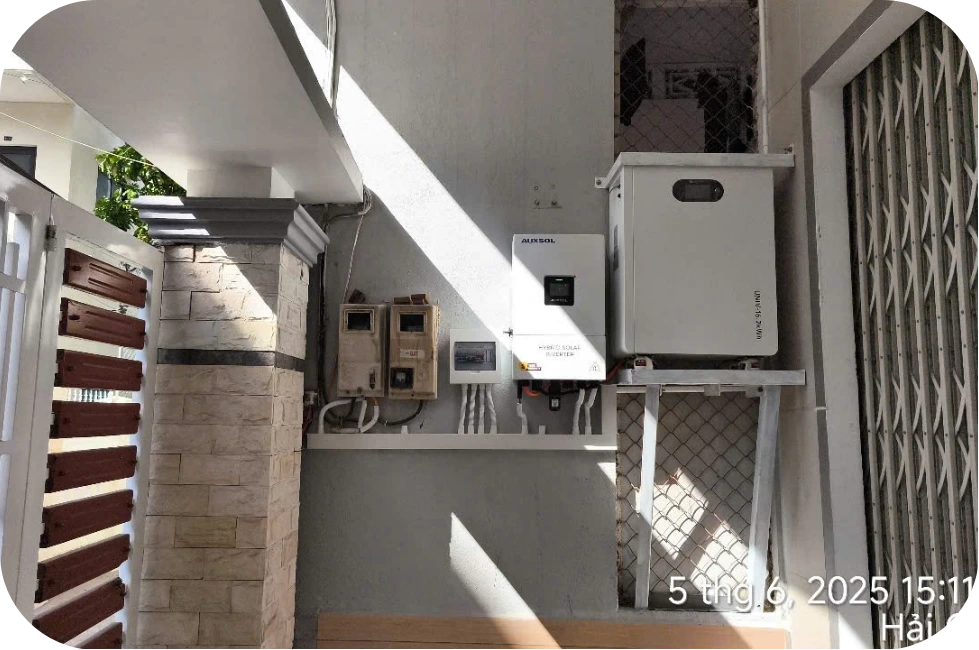
This wall-mounted low-voltage system uses one Easyway UNIV-16.2kWhS battery pack with an ASG-(3.6-8)SL-ZL inverter. The battery is a 51.2V 316Ah pack, providing 16.2kWh of storage capacity in one compact unit.
This type of system is suitable for residential solar backup, self-consumption, and villa energy storage projects where floor space is limited.
Best-Fit Applications
- Home solar backup
- Residential self-consumption
- Villa solar storage
- Compact wall installation
- Small low-voltage solar battery systems
Why This Format Works
For residential users, a wall-mounted battery provides a clean installation and keeps the floor area open. It is especially useful when the project only needs one or a few battery packs.
For installers, wall-mounted systems are easier to explain to homeowners because the final layout is simple and visually clean.
Example 2: Stackable High-Voltage Battery System
System Type: Stackable high-voltage energy storage system
Inverter: Solis
Battery: Easyway UNIV7600(H)
System Configuration: 50kW × 2 inverter system with 45kWh × 4 battery configuration
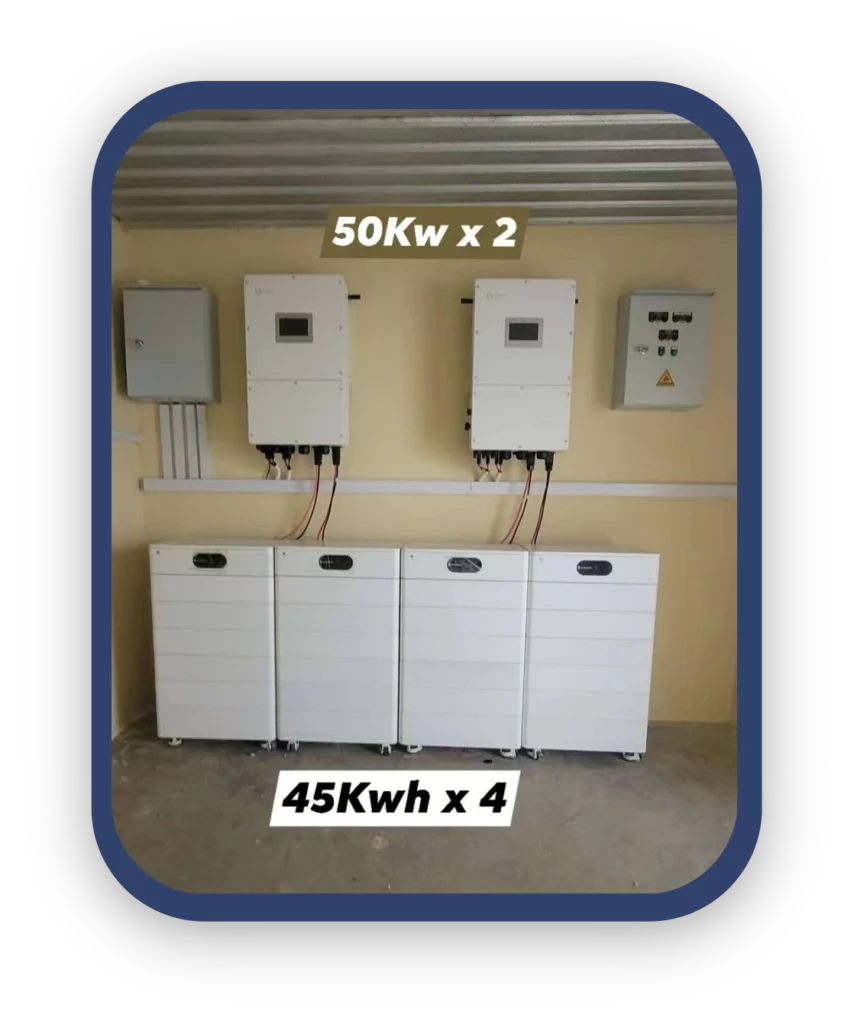
This stackable high-voltage storage project combines Solis inverters with Easyway UNIV7600(H) battery units. The system is configured with 50kW × 2 inverters and 45kWh × 4 battery capacity.
Compared with a wall-mounted residential battery, this stackable high-voltage system is designed for larger capacity requirements, higher power output, and project-based expansion.
Best-Fit Applications
- High-voltage solar storage
- Larger residential backup systems
- Small commercial energy storage
- Solar self-consumption projects
- Scalable battery storage systems
- Light C&I applications
Why This Format Works
A stackable high-voltage system is suitable when the project needs more than a basic home backup battery. The modular structure allows the system to keep a compact layout while supporting higher capacity.
For EPC contractors and installers, stackable systems can also simplify phased project design. The system can start with a defined battery configuration and expand later if the load increases or if the customer adds more solar capacity.
Example 3: Rack-Mounted Battery System
System Type: Rack-mounted low-voltage lithium battery system
Battery: Easyway UNIV5200
Best For: Equipment rooms, telecom backup, small commercial storage, modular battery banks
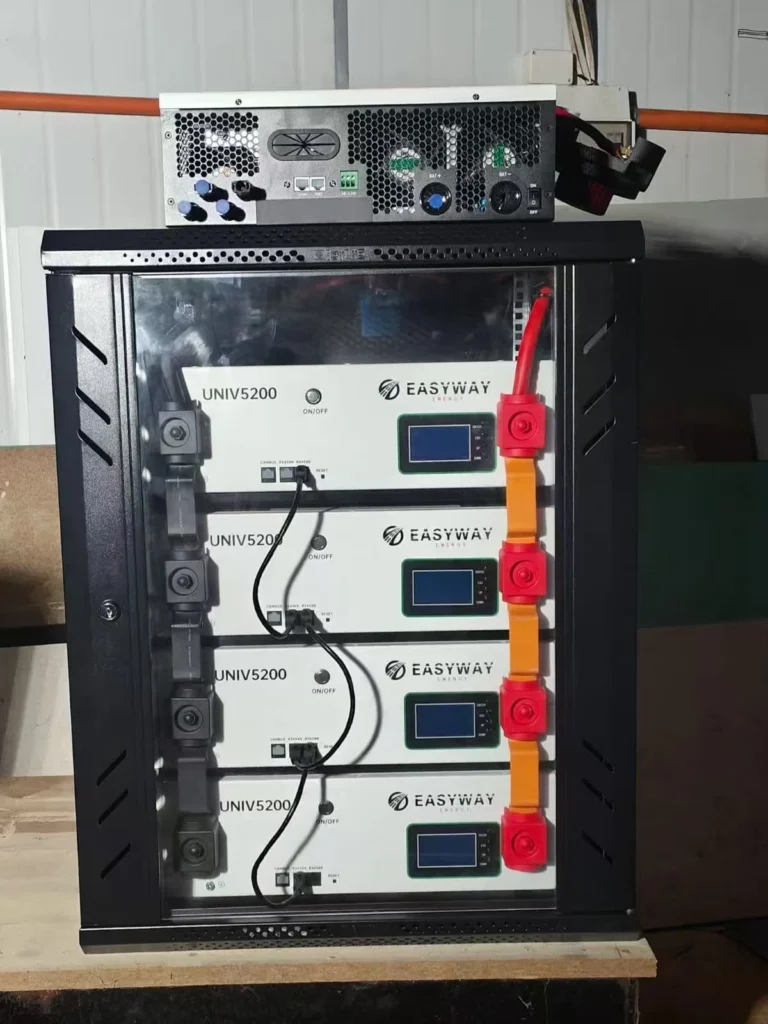
This rack-mounted battery project uses Easyway UNIV5200 lithium battery modules installed inside a battery rack cabinet. The cabinet structure helps keep multiple modules, communication cables, DC connections, and protection devices in one organized layout.
Rack-mounted batteries are especially useful when the project requires centralized wiring and front-access maintenance.
Best-Fit Applications
- Telecom backup
- Equipment room installation
- Small commercial storage
- Modular low-voltage battery banks
- Distributor and installer projects
- Off-grid or hybrid solar systems
Why This Format Works
Rack-mounted systems are practical when the buyer needs multiple battery modules but wants a more structured layout than several wall-mounted packs. The cabinet format helps improve service access and keeps the system more organized for future inspection or replacement.
For distributors and technical installers, rack-mounted batteries are also easier to standardize across similar projects.
Real Project Comparison Table
| Real Project Type | Inverter | Battery Model | Capacity / Specification | Best-Fit Application |
|---|---|---|---|---|
| Wall-mounted low-voltage system | ASG-(3.6-8)SL-ZL | Easyway UNIV-16.2kWhS | 51.2V 316Ah, 1 pack = 16.2kWh | Residential backup, home self-consumption |
| Stackable high-voltage system | Solis | Easyway UNIV7600(H) | 50kW × 2 inverter system, 45kWh × 4 battery configuration | Larger solar storage, small commercial projects |
| Rack-mounted battery system | Project dependent | Easyway UNIV5200 | Modular rack-mounted low-voltage battery modules | Equipment room, telecom backup, modular battery banks |
Installation and Wiring: Which System Is Easier to Deploy?
Installation difficulty depends on the system voltage, inverter compatibility, site layout, and local electrical requirements. However, each battery structure has a typical installation pattern.
Wall-Mounted Battery Installation
Wall-mounted batteries are often straightforward for residential projects, but proper mounting is critical.
Installers should check:
- Wall strength
- Bracket installation
- Cable entry position
- Clearance around the battery
- Inverter distance
- Protection devices
- Indoor or outdoor environmental requirements
A wall-mounted system is usually easier when the project uses one battery pack. As the number of packs increases, cable routing and wall space become more important.
Stackable Battery Installation
Stackable systems are designed for modular expansion. Installation is usually more flexible than wall-mounted systems because the modules can be placed on the floor and stacked vertically.
Installers should check:
- Maximum number of battery modules
- High-voltage or low-voltage system design
- Battery base and floor stability
- Communication wiring
- Inverter compatibility
- Clearance and ventilation
- Commissioning requirements
For high-voltage stackable systems, professional installation is especially important because system voltage and commissioning steps are more complex than standard low-voltage residential batteries.
Rack-Mounted Battery Installation
Rack-mounted systems require a more structured setup. The rack or cabinet must be placed properly, and the wiring layout should be planned before installation.
Installers should check:
- Cabinet size and module quantity
- Battery module spacing
- DC busbar or cable layout
- Communication cable routing
- Breaker and protection device placement
- Front-access maintenance space
- Ventilation and temperature control
Rack-mounted batteries are usually not the fastest option for a very small home system, but they are efficient for multi-module systems that need long-term maintainability.
Space Utilization: Which Battery Saves More Space?
Wall-Mounted Batteries Save Floor Space
Wall-mounted batteries are usually the best option when floor space is limited. They are suitable for garages, utility rooms, and residential walls where a clean layout is important.
Choose wall-mounted batteries when:
- The project is residential
- The user wants a compact appearance
- Only one or a few battery packs are needed
- Floor space must remain clear
- The wall can support the battery weight
Stackable Batteries Use Vertical Floor Space Efficiently
Stackable batteries do not save floor space as much as wall-mounted batteries, but they make good use of vertical space. They are suitable when the buyer wants modular expansion without installing several separate wall units.
Choose stackable batteries when:
- Future expansion is expected
- Higher capacity is needed
- The wall cannot support heavy battery packs
- A modular layout is preferred
- The system may use high-voltage battery modules
Rack-Mounted Batteries Need Dedicated Equipment Space
Rack-mounted batteries need cabinet space, but they can be more organized for multi-module systems. This is useful in technical environments where appearance is less important than serviceability.
Choose rack-mounted batteries when:
- There is an equipment room
- Multiple modules are required
- Centralized wiring is preferred
- Maintenance access matters
- The project is commercial, telecom, or off-grid
Scalability: Which Battery Type Is Better for Future Expansion?
Wall-Mounted Battery Scalability
Wall-mounted batteries can be expanded, but expansion is limited by wall area, cable routing, and inverter support. They work best for small systems, usually one to several packs.
Wall-mounted systems are suitable when the final capacity requirement is already clear and not too large.
Stackable Battery Scalability
Stackable batteries are usually stronger for phased expansion. The user can start with a smaller configuration and add more modules later, depending on the product’s supported expansion range.
This makes stackable systems attractive for:
- Larger homes
- Small businesses
- Solar installers
- Distributors
- Customers planning future PV expansion
- High-voltage battery projects
Rack-Mounted Battery Scalability
Rack-mounted systems are also highly scalable, especially when the project is designed around a cabinet from the beginning. Additional battery modules can be added if the rack, inverter, BMS, and protection system support expansion.
Rack-mounted scalability is best when the buyer wants a technical, centralized system layout.
Safety Considerations: Battery Structure Is Only One Part of the Decision
A battery’s physical structure does not automatically make it safe or unsafe. Safety depends on chemistry, BMS design, installation quality, certification, wiring, ventilation, and system protection.
In 2026, most mainstream stationary solar battery buyers prefer LFP because of its thermal stability, cycle life, and cost-performance balance. LFP is less energy-dense than some EV-oriented chemistries, but stationary storage projects usually care more about safety, lifecycle cost, and cycling performance than weight reduction. (IEA)
Key Safety Factors to Check
Before choosing any battery system, buyers should check:
- Battery chemistry, preferably LiFePO4 / LFP for stationary storage
- BMS protection functions
- Overcharge and over-discharge protection
- Overcurrent and short-circuit protection
- Temperature monitoring
- Low-temperature charging protection
- Inverter communication compatibility
- DC breaker and protection design
- Installation clearance
- Grounding
- IP rating for outdoor use
- Certification and transport documents
For EASYWAY Energy projects, buyers can ask for relevant documentation such as CE, IEC62619, UL1973-related cell or product documentation where applicable, CE-EMC, CE-RED, UN38.3, and MSDS.
Inverter Compatibility: A Critical Factor Many Buyers Miss
One of the most common mistakes in solar battery projects is choosing the battery format before confirming inverter compatibility.
A battery may look suitable, but the system can still fail if the inverter and battery do not match correctly.
Buyers should confirm:
- Battery voltage range
- Low-voltage or high-voltage system type
- Communication protocol
- CAN / RS485 compatibility
- Maximum charge and discharge current
- Maximum number of parallel units
- BMS communication support
- Approved inverter list
- Commissioning process
- Firmware requirements
For example, the stackable high-voltage project above uses Solis inverters with Easyway UNIV7600(H) batteries. The wall-mounted low-voltage project uses an ASG-(3.6-8)SL-ZL inverter with an Easyway UNIV-16.2kWhS battery. These details matter because inverter matching directly affects system stability and commissioning success.
Cost Comparison: Which Battery Type Is More Cost-Effective?
The most cost-effective battery is not always the cheapest battery module. A real project cost comparison should include:
- Battery modules
- Inverter compatibility
- Mounting hardware
- Rack or cabinet cost
- Cables and protection devices
- Installation labor
- Commissioning time
- Maintenance access
- Future expansion cost
- Warranty and replacement process
Wall-Mounted Battery Cost Profile
Wall-mounted batteries can be cost-effective for residential systems because they usually require fewer accessories and provide a clean single-pack installation.
They are cost-effective when:
- The system size is small to medium
- The wall is suitable for mounting
- The user does not need frequent expansion
- The inverter is already compatible
Stackable Battery Cost Profile
Stackable batteries can reduce long-term cost when the buyer expects future expansion. Instead of oversizing the system from the beginning, the customer may start with a suitable base capacity and add modules later.
They are cost-effective when:
- Capacity may increase later
- The project requires a modular layout
- Installation space allows vertical stacking
- The system uses a compatible inverter
- The buyer wants flexible project planning
Rack-Mounted Battery Cost Profile
Rack-mounted systems may require additional cabinet or rack investment, but they can be efficient for larger multi-module systems. The organized layout can reduce maintenance complexity over time.
They are cost-effective when:
- Multiple modules are needed
- The project has a technical room
- Long-term service access matters
- Cable management is important
- The buyer wants standardized deployment
Application Scenarios: Which Battery Type Fits Your Project?
Residential Solar Storage
For most residential solar projects, wall-mounted or compact stackable batteries are usually the best choice.
Recommended battery types:
- Wall-mounted low-voltage battery
- Compact floor-standing battery
- Stackable battery for larger homes
- Low-voltage LiFePO4 battery system
Best applications:
- Home backup power
- Solar self-consumption
- Time-of-use savings
- Villa energy storage
- Small off-grid homes
EASYWAY‘s UNIV-16.2kWhS wall-mounted low-voltage battery is suitable for residential projects that need a compact 16.2kWh battery pack.
Larger Residential and Small Commercial Projects
For larger homes or small commercial sites, stackable systems become more attractive. These projects often need more capacity than a single wall-mounted pack can provide.
Recommended battery types:
- Stackable high-voltage battery
- Modular low-voltage system
- Small rack-mounted battery bank
Best applications:
- Larger solar self-consumption
- Small business backup
- Farms
- Offices
- Retail stores
- Small workshops
EASYWAY’s UNIV7600(H) high-voltage battery system is suitable for scalable projects that require higher storage capacity and inverter-matched configuration.
Telecom Backup and Equipment Rooms
Rack-mounted batteries are often ideal for telecom, equipment-room, and technical installations.
Recommended battery types:
- Rack-mounted low-voltage battery
- Modular 48V battery modules
- Cabinet-based battery system
Best applications:
- Telecom backup
- Server-room-style backup
- Equipment rooms
- Off-grid sites
- Distributor projects
- Centralized battery banks
EASYWAY’s UNIV5200 rack-mounted battery modules are suitable for projects that need organized installation and centralized maintenance.
Commercial and Industrial Energy Storage
For C&I projects, the decision may go beyond stackable vs wall-mounted vs rack-mounted. Larger projects may require high-voltage systems or integrated energy storage cabinets.
Recommended battery types:
- High-voltage battery systems
- Stackable HV systems
- Rack-mounted battery banks
- Integrated C&I energy storage cabinets
Best applications:
- Peak shaving
- Demand charge reduction
- PV self-consumption
- Backup power
- Microgrids
- Industrial parks
- Warehouses
- Hotels
- EV charging support
In 2026, C&I buyers are also paying closer attention to EMS, monitoring, safety design, O&M, and lifecycle value. Research on BESS management increasingly focuses on connecting economic dispatch with safe and efficient battery operation, including grid services, optimization, and predictive maintenance. (arXiv)
How to Choose the Right Battery System: Practical Checklist
Use this checklist before choosing a wall-mounted, stackable, or rack-mounted battery system.
1. What is your required capacity?
As a simple reference:
| Required Capacity | Recommended Direction |
|---|---|
| 5–20kWh | Wall-mounted or compact low-voltage battery |
| 20–60kWh | Stackable or rack-mounted battery system |
| 60kWh+ | Stackable high-voltage, rack-mounted, or C&I cabinet system |
The exact choice depends on load profile, inverter type, backup duration, and installation environment.
2. Where will the battery be installed?
Choose the battery structure based on the site:
| Installation Site | Suitable Battery Type |
|---|---|
| Garage wall | Wall-mounted battery |
| Utility room | Wall-mounted or stackable battery |
| Equipment room | Rack-mounted battery |
| Outdoor sheltered area | Depends on IP rating and enclosure |
| Commercial electrical room | Rack-mounted or high-voltage system |
| Large project site | High-voltage or cabinet ESS |
3. Will the system need future expansion?
If future expansion is likely, choose a system that supports modular growth.
- Choose wall-mounted if expansion is limited
- Choose stackable if phased capacity growth is expected
- Choose rack-mounted if multiple modules need centralized management
- Choose high-voltage or C&I cabinet systems for larger commercial projects
4. Which inverter will be used?
Confirm inverter compatibility before placing an order.
Check:
- Brand and model
- Voltage range
- Communication protocol
- Single-phase or three-phase system
- Maximum battery capacity
- Parallel support
- Firmware compatibility
- Commissioning requirements
5. What certifications and documents are required?
For international buyers, especially distributors and EPC contractors, documentation is part of the product value.
Ask for:
- CE
- IEC62619
- UL1973-related documentation where applicable
- CE-EMC
- CE-RED
- UN38.3
- MSDS
- Warranty terms
- Installation manual
- Datasheet
- Inverter compatibility list
For buyers targeting the EU market, it is also worth preparing for future digital battery passport and traceability requirements. Industrial batteries above 2 kWh will require a digital battery passport from February 18, 2027. (S-GE)
Planning a Solar Battery Storage Project?
If you are comparing battery types, system voltage, capacity, or inverter compatibility, EASYWAY can help you evaluate a suitable lithium battery solution for your project.
Common Mistakes When Choosing Battery Installation Type
Mistake 1: Only Comparing kWh Price
A lower battery price does not always mean a lower project cost. Installation labor, wiring, cabinet, protection devices, commissioning, and maintenance access can change the total cost.
Mistake 2: Ignoring Wall Strength
Wall-mounted batteries require a suitable wall structure. If the wall cannot safely support the battery, a floor-standing or rack-mounted solution may be better.
Mistake 3: Forgetting Maintenance Clearance
Battery systems need access for inspection, wiring, display screens, breakers, and communication ports. A compact installation should not block service access.
Mistake 4: Choosing a Residential Battery for a Commercial Load
Residential batteries may not be suitable for higher-power C&I loads. Commercial projects need proper power rating, discharge current, cooling, protection, and system design.
Mistake 5: Not Confirming Inverter Compatibility
Battery and inverter matching is critical. Always confirm voltage, communication, BMS protocol, maximum current, and supported parallel configuration.
Mistake 6: Ignoring Environmental Conditions
Temperature, humidity, dust, salt mist, and outdoor exposure can affect battery performance and lifetime. Always check IP rating and operating temperature range.
Mistake 7: Not Considering Future EU Documentation Needs
For European distribution, buyers should increasingly consider traceability, documentation, and lifecycle information. Battery passport requirements will make product data management more important from 2027. (S-GE)
EASYWAY Recommendation: Match the Battery Structure to the Project
There is no single best battery format for every solar energy storage project. The right choice depends on capacity, installation space, inverter compatibility, safety requirements, maintenance access, and future expansion plans.
For Residential Solar Projects
Recommended options:
- Wall-mounted low-voltage lithium battery
- Compact LiFePO4 battery pack
- Floor-standing low-voltage system
- Stackable battery if future expansion is expected
Best fit:
- Home backup
- Self-consumption
- Villas
- Small off-grid homes
Example product direction:
- Easyway UNIV-16.2kWhS
- 51.2V 316Ah
- 1 pack = 16.2kWh
For Installer and Distributor Projects
Recommended options:
- Modular low-voltage batteries
- Rack-mounted lithium battery modules
- Stackable systems
- Inverter-compatible product lines
Best fit:
- Repeatable installation projects
- Local installer networks
- Distributor product portfolios
- OEM / ODM cooperation
- Regional solar storage programs
Example product direction:
- Easyway UNIV5200
- Rack-mounted modular battery system
For Larger Solar Storage and Small Commercial Projects
Recommended options:
- Stackable high-voltage battery system
- Modular HV battery system
- Rack-mounted battery bank
- Project-based configuration
Best fit:
- Larger residential systems
- Small business backup
- Commercial self-consumption
- Higher capacity projects
- Three-phase inverter systems
Example product direction:
- Easyway UNIV7600(H)
- High-voltage stackable battery system
- Compatible project example with Solis inverter
For C&I Energy Storage Projects
Recommended options:
- High-voltage battery systems
- Integrated C&I ESS cabinets
- Project-based BESS configuration
- EMS-supported commercial systems
Best fit:
- Peak shaving
- Backup power
- PV self-consumption
- Industrial loads
- Microgrids
- Warehouses
- Hotels
- EV charging support
Final Comparison: Which Battery Type Should You Choose?
| Choose This Battery Type | If Your Project Needs |
|---|---|
| Wall-mounted battery | Compact home storage, clean installation, limited floor space |
| Stackable battery | Modular expansion, higher capacity, flexible system design |
| Rack-mounted battery | Centralized wiring, equipment room layout, multi-module systems |
| High-voltage battery system | Larger power demand, scalable PV storage, small commercial projects |
| C&I ESS cabinet | Industrial loads, peak shaving, advanced energy management |
A wall-mounted battery is usually the best option for compact residential systems. A stackable battery is better when the project needs expansion and higher capacity. A rack-mounted battery is more suitable when the system needs an organized cabinet layout and easier technical maintenance.
For larger commercial and industrial projects, buyers should also consider high-voltage systems or integrated C&I energy storage solutions.
Need Help Choosing the Right Battery System for Your Project?
Every solar energy storage project has different requirements for capacity, inverter compatibility, installation space, safety, and future expansion.
EASYWAY provides wall-mounted, rack-mounted, stackable, low-voltage, and high-voltage lithium battery solutions for residential, commercial, and project-based solar energy storage applications.
Share your project information with us:
- Inverter brand and model
- Required battery capacity
- Low-voltage or high-voltage system
- Installation environment
- Backup duration
- Residential or commercial application
- Certification requirements
Our technical team can help recommend a suitable battery configuration for your project.
CTA Button: Get Battery Configuration Support →
FAQ: Stackable, Wall-Mounted, and Rack-Mounted Batteries
Is a stackable battery better than a wall-mounted battery?
Not always. A stackable battery is better for modular expansion and higher capacity projects. A wall-mounted battery is better for compact residential installations where floor space is limited.
Is a rack-mounted battery better for commercial projects?
Rack-mounted batteries are often suitable for commercial, telecom, and equipment-room applications because they provide centralized wiring and front-access maintenance. However, larger C&I projects may require high-voltage systems or integrated ESS cabinets.
Which battery type is best for home solar storage?
For most home solar projects, a wall-mounted low-voltage battery is a practical choice. If the homeowner needs larger capacity or future expansion, a stackable battery system may be better.
Which battery type is easiest to install?
Wall-mounted batteries are usually straightforward for small residential systems. Stackable batteries can be convenient for modular expansion. Rack-mounted batteries require more structured installation but are easier to manage in multi-module systems.
Can wall-mounted batteries be expanded later?
Yes, many wall-mounted battery systems can be expanded, but expansion depends on wall space, inverter compatibility, cable routing, BMS support, and the maximum number of supported battery units.
Are stackable batteries suitable for commercial energy storage?
Yes. Stackable batteries are suitable for larger residential, small commercial, and some high-voltage energy storage projects. For larger C&I applications, a dedicated high-voltage or cabinet-based ESS may be more suitable.
Are rack-mounted batteries only for telecom systems?
No. Rack-mounted batteries are also used in equipment rooms, off-grid solar systems, small commercial projects, and modular residential battery banks.
Which battery type is safest?
Safety depends more on battery chemistry, BMS design, certification, installation quality, protection devices, and operating environment than on the physical format alone. LFP batteries are widely used in stationary storage because of their safety profile and cycle life.
What should I check before buying a solar lithium battery?
You should check battery capacity, voltage, inverter compatibility, communication protocol, certification, installation method, IP rating, warranty, BMS functions, and future expansion support.
What battery trend should buyers watch in 2026?
The key 2026 trends are continued LFP dominance, faster growth in solar-plus-storage, more C&I energy storage demand, emerging sodium-ion development, smarter BESS management, and increasing documentation requirements such as the EU battery passport.
Get a Project-Based Lithium Battery Recommendation
Whether you are planning a home solar battery system, a high-voltage stackable battery solution, or a commercial energy storage project, EASYWAY can help you select a safer and scalable battery configuration.