Tired of Blackouts and Rising Electricity Bills?
Power outages are no longer rare events. From extreme weather to unstable grids, homeowners are facing increasing disruptions. At the same time, electricity prices continue to rise—making energy independence more valuable than ever.
You can now power your house with a battery and take control of your energy.
In this guide, you’ll learn exactly how to build a home battery backup system, step by step—even if you’re not an engineer.
👉 Want to skip the reading?
Take our 1-minute quiz to find the perfect battery size for your home.
1.Why Power Your Home with a Battery?
Energy Independence
A home battery ensures your essential appliances keep running during blackouts. Whether it’s lighting, refrigeration, or internet, you stay protected.
Lower Electricity Bills
With time-of-use (TOU) pricing, electricity costs more during peak hours. A battery lets you:
- Store cheap off-peak electricity
- Use it during expensive peak hours
This is called peak shaving
Maximize Solar Energy
If you have solar panels: - Store excess solar energy during the day
- Use it at night
This reduces reliance on the grid and increases ROI.
2.How Does a Home Battery Backup System Work?
A home battery system stores electricity and supplies it when needed.
With Solar Panels
- Solar panels generate DC electricity
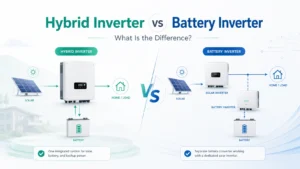
- Inverter converts DC → AC
- Battery stores excess energy
- Power is used at night or during outages
Without Solar (Grid-Charged)
- Battery charges from the grid
- Used as backup during outages
- Can optimize electricity costs with TOU pricing
Modern systems use intelligent BMS (Battery Management Systems) and high-efficiency inverters to ensure safety and performance.
3.Step-by-Step: How to Connect a Battery Backup to Your House
Step 1: Assess Your Power Needs
Decide between:
- Whole-house backup → full independence
- Partial backup → only critical loads (recommended for cost control)
Typical essential loads:
- Lights
- Refrigerator
- Wi-Fi
- Fans / small appliances
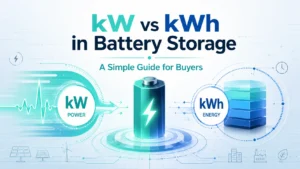
👉 Not sure how many kWh you need?
Step 2: Choose the Right Battery Type
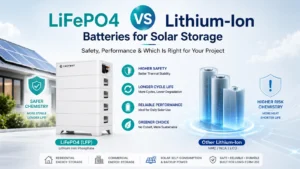
Lithium-ion vs LiFePO4
| Type | Pros | Cons |
|---|---|---|
| Lithium-ion | High energy density | Lower safety |
| LiFePO4 | High safety, long life (6000–8000 cycles) | Slightly higher cost |
👉 For residential storage, LiFePO4 is the industry standard due to:
- Thermal stability
- Long lifespan
- Lower total cost over time
Step 3: Select Compatible Inverters & Equipment
You’ll need:
- Hybrid inverter
- Battery system
- Monitoring system
👉 Make sure:
- Voltage compatibility matches
- System supports expansion
Step 4: Professional Installation
Do NOT DIY unless certified.
Reasons:
- Safety risks (high voltage)
- Legal permits required
- Grid compliance
👉 Always work with certified installers.
H2: How Much Does It Cost to Power a House with a Battery?
Typical Costs:
- Battery system: $5,000 – $20,000+
- Inverter: $1,000 – $5,000
- Installation: $2,000 – $8,000
Government Incentives
In many regions, you can benefit from:
- Tax credits (e.g., up to 30% in some markets)
- Local rebates
How long can a battery power a house during an outage?
It depends on your battery capacity and energy usage.
A 5–10 kWh system can power essential loads (lights, fridge, Wi-Fi) for 8–24 hours
A 15–30 kWh system can support whole-house backup for longer durations
👉 For precise results, a customized load calculation is recommended.
How long do home batteries last?
Most modern lithium batteries—especially LiFePO4—last:
6000–8000+ cycles
Around 10–15 years depending on usage
👉 Proper system design and a high-quality BMS significantly extend lifespan.
Is a home battery system worth it?
Yes, especially if you:
Experience frequent power outages
Want to reduce electricity bills
Have or plan to install solar panels
The long-term savings, energy security, and environmental benefits make it a strong investment.
Still have questions?
Contact our energy experts for a free consultation and system design within 24 hours.